Bushman x Snowy’s Camping Podcast
- Date Published: 27 July 2026
-
 Ben & Lauren - Snowys
We chatted to Tommy, Bushman Fridge’s Director and resident expert on all things Bushman Fridges and Freezers on the Snowy’s Camping Podcast about why a Bushman camping fridge is the best option for experienced campers.
Watch the podcast
Transcript
Lauren Wishart: Howdy folks and welcome to the Snowy’s Camping Show with Ben and Lauren. How you going Ben?
Ben Collarton: Good. How are you?
LW: Good, thank you. before we get into it today, don’t forget to subscribe wherever you’re listening to your podcast, be it YouTube or your favourite podcast app or also Spotify now too and jump into our Facebook group, Snowy’s Camping Banter, where we talk everything camping and outdoors and podcast and gear related and all that hooha, whatever you want. Whatever you want really.
BC: Give it a try.
LW: So today we’ve got an interview with a guest from Bushman Fridges which is very exciting because we have done a couple of fridges in the past like fridge brands in the past and we’ve always wanted to get Bushman’s on board and we finally sort of got everything aligned. which is great news.
BC: Bushman is kind of that quiet achiever brand. It just sat there. It’s got this really good reputation behind it. We look at our warehouse and go, ‘oh we need more Bushman fridges we keep selling through them,’ but it’s not quite as in your face but I’m excited to talk to them today, because the quality and the reputation and kind of the community around Bushman fridges is pretty strong.
LW: I would definitely agree with that, and I think if you’ve got a product that does well but there’s no song and dance and fireworks about it, it does well for a reason. So, with all that said, thanks for joining us, Tommy.
Tommy Stockdale: Pleasure. Pleasure. Thanks, Ben. Thanks, Lauren.
BC: Good to have you.
TC: Excited to be here.
BC: We tried to line this up for a while now. Glad we managed to get things sorted out. You’re in in Melbourne at the moment, which is a bit grey apparently over there.
TS: Yeah, it’s a little grey and drizzly, but you know, it can change in a minute. So, it might be beautiful this afternoon.
BC: That’s Melbourne for you, right? Four seasons in one day.
Hey, Tommy, we’ve had your fridges in our range, I’ve been at Snowy’s for well over a decade. Bushman’s always been in the range as far as I can remember. Always been a reliable brand.
You’ve been at the core of it for a long time. But let’s throw it to you. Tell us a little bit about you, your background, qualifications, how long you’ve been at how long you’ve been at Bushman’s.
TS: So, I’ve been a Bushman for 11 years now since January 2015. In terms of qualifications, I’m more of a life skills person. I didn’t complete year 12. I got my VCA certificate, I wouldn’t say I did very well at all.
And, for the next five or six years I just did a whole different types of jobs. I did some sales jobs. I worked on a cattle station actually for 6 months in Queensland, which was great, riding motorbikes all day. I went overseas in my early 20s where I met my now wife. So, I met her when I was 23 years old. She was only 21. We’re still together, which is awesome.
BC: Nice.
TS: When I came back, I actually fell into starting a business. I started a labour hire company for the printing industry, which is a little bit left field. So, I ran that for about 10 years.
We had an office in Melbourne. and I moved to Sydney, actually opened an office up in Sydney and that was a good small business. It got quite big towards the end, and I ended up probably spending more of my time doing OS and legal and IT and systems and it probably got to the size where I didn’t really enjoy it as much as I did when it was smaller.
And I sold that when I was about 35. I thought “here we go, I’m going to have all this time off. It’s going to be great.” And I think, I got to about six weeks of not having a job, and I remember getting up in the morning thinking, “What am I going to do today?” So, it wasn’t, you know, as amazing as what I probably thought, ‘Oh, you know, being semi-retired will be amazing. I’ll have all this free time.’ But, yeah, I was still in my mid 30s.
So, I went up to Bushman, which is five minutes up the road from my house.
And I’ve known Gary Cotman, who started the business, and his son Paul since I was 2 years old. I lived next door to them when I was when I was when I was young. And I just went up and said, “Hey, can I can I have a job? How about you hire me as just a salesperson? I’ll drive around the country, and I’ll go to every town in Australia, every major town in Australia, and I’ll visit every camping, fishing, four-wheel drive auto-electrical store in the country.”
And I did. It took me about a year.
BC: Wow.
TS: And that was in 2015. That was an amazing experience, you know, just to just to get out to some really distant places. and then I came back into the office in 2016, and business was sort of starting to get a little bit better after that work. And yeah, for the last 10 years I’ve been there and love it. I love every day. I wake up Mondays and I’m like, “Oh, it’s Monday. Thank goodness I can go to work.”
You know, we’ve got a really nice team of people, and we just do lots of the little things right.
I think getting the little things right in business should be easy and that’s all we focus on, you know, like just having good products, answering the phone, returning emails, helping customers.
Just all the basic little things and that’s what we focus on.
And then the business has grown a lot in the last ten years.
We’re probably 15 times bigger we were now than we were when I started, but we’re still at a nice small size where, I answer the phones, talk to customers every day, doing tech support and helping them choose fridges and after sales support and the store owners in the business, we all answer the phone.
So, it’s kind of it’s like a small a small business.
We just punch a bit harder than our weight category.
LW: I reckon we can probably relate to that, right?
Like lots of people think Snowy’s is massive, but it’s like actually no, we’re family business and we’ve actually got a very small team here really that sort of runs the whole place nationally and it’s like people always put us at the line with BCF and Anaconda and stuff. It’s like we’re not we’re not that at all.
BC: Yeah, I can a lot of that resonates. Maybe that’s why it’s worked so well in our shop because so much what you say resonates with what we try to achieve here with customer calls, pick up the phone and answer it and actually have a person in the business, speak to them, it goes a long way.
TS: So, a real person and that’s one of the reasons we love Snowy’s, you know, you’re right.
There’s a lot of synergy between the businesses and you know the fact you guys have a really good online presence but it’s supported by bricks and mortar you know you’ve got your store in Adelaide and one in Brisbane and it’s just nice to have you know the actual capability to show people products and talk them through it and then they also have the opportunity to purchase online.
There’s a lot of online only businesses and it’s you just don’t get that same technical understanding of the products because they’re not surrounded by the products all day.
BC: Yeah. Hard to compare side by side and functionality which is a big thing in some of your fridges.
The business itself, Bushman fridges, is it 1982 I think is the date I found somewhere. Is that when it all started or was it before that?
TS: It was 1982, which is a long time ago. I would have been five years old giving away my age at that at that stage. And Gary was running it basically from his house which was next door to ours. And he was importing gas fridges from Brazil.
They were called Console gas fridges. And so that was the original business. and it we imported gas fridges up until 2022. The sales every year just got a bit less and less as all the mining companies went out to rural towns during the 80s and ’90s. They took power out with them. A lot of these places didn’t have power.
So, gas fridges were a really big product in the 80s and ’90s. Not so much for caravans or RVs, but for people living off grid. And then it just slowly sort of dwindled and dwindled to the point where I think in 2022, we sold three or four hundred of them and we got to the point where we just couldn’t get it to work anymore financially. So, we stopped selling gas fridges.
We still keep all the parts. We’ve got parts in our warehouse of fridges we stopped selling 25 years ago.
BC: Oh, right.
TS: Just in case customers need something.
BC: And I found somewhere the name Overlander. Does that is it was it somewhere Bushman was called Overlander initially? What’s the story behind that?
TS: Yes. Initially the first 12V fridge that Gary built was called Overlander and only for about 12 months.
BS: Okay.
TS: And then he registered the Bushman name and the Bushman URL, so bushman.com.au. So, Gary was quite ahead of his time with all of that, which has worked out great for business, but yeah, that was potentially 25 years ago.
Yeah. Okay. The original Bushman fridge. And the interesting thing is if the tooling for that fridge, we’ve refreshed it, but it’s identical to the one we sell now. So, if you have that fridge and you need a part, you can buy it from us and it’ll fit.
LW: It is actually a common question that comes up sometimes. It’s like, why does this fridge look like it’s from 30 years ago whereas all of these other fridges look really swish? Like what’s the resistance to changing the aesthetics of the fridge? Like, where has that decision come from?
TS: Yeah, it’s just our philosophy of keeping things simple and you know, we like the idea that if you’ve got a fridge that’s 20 years old and you need a part that it’s still going to fit from the current model and that fridge worked amazing.
And there just hasn’t been a need for us to change it. The design of it was right from the start. We’ve tweaked little things over the time, you know, as we’ve learned.
We’ve made little changes to internal components and some of the electronics and stuff, but it’s still it’s still reverse compatible, plug and play with the original fridge.
And it does look a bit 70s. People are like, “Oh, it looks so 70s.” And we’re like, “Yeah, but you know, we could release a newer version that might look fancier. You know, maybe it has Bluetooth and it has Wi-Fi and it has a, you know, dairy compartment on the top. But all those things are failure points.
And we actually disassembled a fridge from another brand a couple of years ago. We thought, let’s have a look. And we pulled it apart and the amount of wiring that was in it – it kind of looked like an aircraft wiring loom.
I think there were five circuit boards in the fridge. There was one there was one for Bluetooth, one for Wi-Fi, one for the fridge, one for the thermostat, and one for the control panel. Plus, there’s one on the driver. So, there was six.
And if any one of those stops working, the fridge doesn’t work.
And we were just in shock. We were like, “Wow, okay. Well, let’s just keep doing it the way we’re doing it, because we’ve only got one control panel in that fridge and if it if it fails, you just get another one from us and unplug it and plug back in and away you go.”
BC: So, if you just got that one wiring, for people who don’t know, the Bushman fridge control panel is I don’t know, if old school is the right word to use, but it is like a click push button.
It’s got all the functionality there, but it doesn’t have this fancy kind of like little screen where you’ve got, you know, one button that does everything and you’ve got to scroll through menus and stuff.
It’s just it’s got I don’t know not many buttons on it, right? But if something happens with that unit, you just replace that.
Is there just that one wiring loom then that goes to that control panel? Is that all you’ve got in your fridge?
TS: That’s the only It’s the only one. That’s it. And you can unplug it and plug a new one in in about 15 minutes. And we can express post it anywhere in Australia. It’ll be there in a couple of days.
The thing with the buttons too, like the modern way to do it is you have, you know, like a plastic sticker covering the buttons and you know, you just push it’s like smooth and you push it. But the but the more you push it, the buttons start to wear off over time.
And you know, if you’ve had a fridge for 5 or 10 years, you can’t read the buttons anymore.
So, we’re just sort of like, you know, the one we’ve got works and it’s reliable, and our customers love it.
The customers that understand that fridge, it’s probably the most underrated camping fridge in Australia and a lot of very experienced, you know, proper outback people that spend, you know, weeks in deserts and do really serious off-roading would use that fridge and because they understand how it works, but it’s quite difficult to sell because it has an extension kit that comes with it and there’s no other fridge that has anything like it.
So, it’s a challenge. People really need to see it in person.
It’s a challenge to sell online because the concept is new. And the easier way to sell portable fridges is to have a 40 litre, a 50 litre, a 60 litre, and a 70 litre, and people pick the size that they’re after.
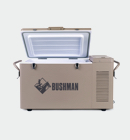
Whereas this, this fridge is 35 litre as a base fridge. And then there’s an extension collar that sits on top.
So, your first your normal lid slides off, the extension collar slides on, that’s another 10 litres.
And then there’s a dome lid that comes with it as well which just slides on and that’s another 7 litres.
So, you end up with a 52-litre camping fridge.
And there’s a couple of benefits to that. The first one is that you can by adjusting the size you can use it in 35L which is quite small and really efficient day-to-day.
And then if you go away for a weekend or a camping trip you increase the size from 35 up to 52 litres and then you’ve got a slightly bigger fridge that takes up more space, but when you get home, you can you can revert it back to 35 litres.
BC: Is that the Original Bushman fridge? Because it’s your chest one that we’re talking about. It’s a brown fridge. And this is the one that I guess typically looks like
LW: Yeah, it’s the 70s one or whatever.
BC: Yeah. It’s not kept up with the, you know, the fancy sort of sleek looks. But is that was that the original design? Like is that how it’s been since it came out?
TS: Yeah, exactly the same. Exactly the same.
BC: And how long is that one the design from the start? Like are we talking a fridge that’s 30-40 years old that design or when did that sort of come out?
TS: Yeah, it would be a bit over 25 years old.
BC: Okay. Yeah, that’s awesome.
LW: You mentioned just before about how it can be quite difficult to sell because it’s it is a very unique product and so you have to sort of be really understand how it works to understand the benefits of it.
Because a lot of people investing in a car fridge, it’s a big investment and so I think, ‘What capacity fridge do I need?’ is probably one of the biggest questions we get, because you don’t want to go too big and then you’ve got this massive expensive fridge and you don’t utilise it; and then you don’t want to go too small and then have to be carting an esky around.
Does a question ever come up about whether or not the aesthetics of it prevent you from being competitive with other space like in that would people just look at it and write it off and not even give it a second chance just because it doesn’t look modern?
TS: Probably. Yeah, I think there’d be a little bit of that too. But at the same time some people love it.
Like it’s a super rugged built fridge and when you see one in person you can see the build quality of it and we do little things that that are unique – so the cabinets on those fridges now are electroplated. We dip them after they’re assembled.
So, they’re marine grade electroplated. So, like you could, which is really overkill for a fridge, but it just means that if you wanted to use it in a marine environment or something, it’s not going to rust.
So, it’s electroplated before we powder coat it, which is kind of awesome. But it is a very rugged fridge.
BC: Is this the most recent update we’ve seen with your HD range? Is that, was that part of that? Is it heavy HD for heavy duty? Is that what you called it?
TS: Yeah. So, we released a new or an updated version of all our fridges in the last couple of months, and they’re the heavy-duty series.
So, we made tweaks to construction and some components internally.
There are some styling changes too for some of the fridges, but it was more about probably things that you can’t see, which is often the way we go about it.
We use a special compressor from Secop, which is the original Danfoss, the original Austrian company that’s been making DC compressors longer than anybody since the 50s.
And in our opinion, they make the best compressors in the world. We’ve always used them.
To give you an idea on how good they are, like we would have sold, let me do some quick maths, maybe 100,000 fridges with those compressors in them.
And if you came and had a look in our spares department, we’d probably keep three or four on the shelf, right? So that’s how reliable they are.
And then we found out last year that Secop had released a heavy-duty version. So, they designed this for the North American trucking industry where they run trucks 365 days a year, 24 hours a day.
They don’t stop. And so, they had a requirement for a compressor that was even stronger that can handle, you know, high heat and a lot of vibrations over a long period of time.
We tested those and they work great. Same kind of capacity as the ones we were using previously.
So, we use them in all our fridges now and we provide a 7-year compressor warranty on them as well.
BC: Nice.
TS: Look, at times, we think we could probably provide a 20-year compressor warranty, but you know, when you start going that far out, things can get tricky with paperwork and that sort of stuff.
But yeah, that we just want people to think if they buy a Bushman fridge, it’s going to last a long time.
BC: Awesome. Let’s take a step back to your chest fridge with the different zones.
There are fridges out there that have two zones. A freezer and a fridge or both fridge or both freezer with a barrier down the middle.
Clearly a definition between where you put your ice creams and where you put your, you know, your fruit and veg. Yours is one zone, but you still claim you can use it as both.
Can you just briefly touch on that for those who are interested on how that works?
TS: Yeah, I can. The best the best way to understand this is just jump on our YouTube channel. We’ve got a video on there goes about give minutes that talks through it.
If a customer is after a chest fridge that has a separate freezer and a separate fridge section, and that’s their requirement, they need that minus 15 in the freezer, then this isn’t the right fridge. They’d need to buy a dual-zone fridge. Or they’d need to have two fridges.
So, one they run as a fridge and one they would run as a freezer, if they need a significant amount of freezer and fridge space.
The slight downside to that is to get a good size chest fridge that has, let’s say, a 30-litre fridge compartment and a 30-litre freezer compartment. It’s a big fridge. And, you would know from what’s in your showroom, they take up a lot of space.
They often don’t look so big when they’re in the showroom, but then if you take it home and you put it in the back of your car, it’s like, I’ve taken up half of the rear of my car or you put it on the back seat and it takes up, you know, 3/4 of the back seat.
BC: Yeah.
TS: And they use a lot of power and they’re very heavy.
So, they do have their application probably in a slide-out camper where you’ve got a kitchen and you can slide it out so you’re not moving the fridge around.
The space isn’t an issue in the back of your four-wheel drive or your car. In that scenario, they work really well, but for general camping and, you know, day-to-day use and full driving, the dual zones get very big. So, we made the decision probably seven or eight years ago.
We actually looked at building a dual-zone fridge or a bigger version of that original Bushman fridge and we decided that we would invest more time into uprights and that was when we released the DCX series.
So, for viewers who don’t know, there’s four different sized little upright fridges from 50L up to 130 litres, and they’re basically fridge only.
They have a little freezer in them which is more just for you know ice packs and ice cubes and those sort of things but they’re predominantly fridges and then for customers who need a deep freezer, and that’s either going to be ice cream, because ice cream really needs at least minus 5, ideally minus 18, or they’re fishing and they want to freeze fish fillets or if they’re freezing products for weeks at a time, then you would need a deep freezer.
So, we have a drawer fridge, which also works as a deep freezer, that’ll run minus 18, in 45 degrees ambient. It’s crazy.
Yeah, it’s unbelievable really. And that gives customers the option to say, I do need a dedicated freezer.
And then I will have that as a dedicated freezer, which is only 30L, so it’s small. It’s a good size for a freezer.
And then they can have another fridge, which would which doesn’t have to be as big then that they can use as their fridge when they’re camping.
And then when it comes to day-to-day, they probably turn the drawer freezer off and then they just run their smaller fridge.
BC: Mhm.
TS: From our perspective, you know, that’s the way a lot of our customers are going.
We focus more on, you know, small and medium size fridges rather than really big chest fridges.
Yeah, it’s just a point of difference, I suppose.
I mean, we do have Bushman customers that are like, “Oh, we’d love an 80-litre chest fridge,” but they’re sort of few and far between.
BC: If you jump online and look at that video because that does explain it very well, but basically, the premise is that at the bottom it stays colder than at the top.
So, you put your frozen stuff at the bottom and it’s probably a good system I think, because you can start with a bit of planning is what you’d need just to start with the frozen stuff on the bottom and then as you need it moves up in the fridge and then it’s defrosted by the time you need to use it and you can just keep cycling through.
But for those who are questioning it, it does work for frozen as well. You’ve just got to manage how you how you use the fridge.
BC: No, you’re right. So, the cooling element in the fridge is in is in the lower section of the chest fridge. And it comes with three baskets that stack up on top of each other.
So, if you set the fridge at about minus 5, then the lower the lowest quarter of the fridge will be around minus 5.
The middle of the fridge will sit around 1 or 2 degrees and then the top basket sits at about 6 or 7.
So, you can with pre-frozen items. Let’s say you’re going camping for, you know, a week, you can put your pre-frozen goods right in the bottom, your uh things like dairy and cold meats in the middle basket, and then at the top you put your fruit and veggies, and that way they won’t freeze because you don’t want to have frozen banana or tomatoes or lettuce. It doesn’t work very well.
And then it gives you the ability that that the things in the bottom will keep frozen. I mean, it’s not ideal for it’s not for long-term storage.
You wouldn’t want to have, you know, a chicken sitting at -5 for 2 months at a time. But generally, if you’re going camping, it’s short-term stuff anyway.
We have very few customers that would go more than a week without going past the store and being able to restock.
BC: Yeah.
TS: The most extreme is usually two weeks and you know, the majority of people that camp probably like myself, you’re camping and you’re somewhere you know near a store.
So, you can top up as you go.
BC: Yeah. I guess you’d have to use it predominantly as a freezer or really ramp the temperature down if people are expecting to catch fish and freeze the fillets.
They’d want to be setting it more than minus 5. Like you couldn’t put something in the bottom with a set of at minus 5 and expect it to freeze not very quickly anyway. It’s going to chew through a lot of power. Is that right?
TS: Yeah. At that temperature it’ll freeze, like lean meat and ice cubes and those sorts of things.
The hardest things to freeze are always ice-cream which needs close to minus 18, bread which has a very low water content and Zooper Doopers. Bread’s very hard to freeze.
BC: Okay.
TSL But again, you know, do you need to freeze bread? And for how for how long do you need to freeze bread? It’s really just for as long as whatever the gap is in between stores.
BC: You touched on a bit before I wanted to talk about efficiency, because when 12V fridges come in, people start researching it. They jump online and research 12V fridges and fridge efficiency always comes into play.
It’s a bit like, how many litres per 100ks you get out of your car; everyone’s claiming theirs is the best. Truth is from my scenario, and I’m interested in your take on this that there’s so many variables attached to that.
Most fridges sit around about the same, but can you talk to that with Bushman? Is there something that you do to make yours more efficient or are we kind of all on a pretty level playing field there?
TS: Yeah, there are a couple of things that really help a low power fridge be efficient and I’ll go through them, because there’s a few.
The most common would be air flow to the compressor.
All the all the heat from inside the fridge gets extracted and it ends up at the compressor and then there’s a component called a condenser or a heat exchanger which is like a black tubular grid, has a fan on it and that’s blowing the heat away from that compressor area.
The most important thing with a low power fridge is to have free air flow to the compressor area. And the better the air flow, the more efficient the fridge will work. We talk to customers about this a lot. That number one.
And the second thing, which we see more now with four-wheel drive canopies, which we which has only really become an issue in four-wheel drive canopies, is radiant heat. So, a canopy can get very hot and they’re sealed and the roof of a canopy is like a little oven.
If you’ve got your fridge in there and your canopy doesn’t have a rooftop tent or it doesn’t have any insulation in it on a hot sunny day in a black canopy, most of them are dark. If you put your hand on the inside of the ceiling, you can’t keep your hand on it. That’s how hot it is.
So, it’s in the 50s plus and that heat just radiates onto your fridge and it’s working against itself.
So, for canopies, the big one is, either, if you have a rooftop tent, that solves that problem because it insulates the ceiling. Or you would want to put insulation inside the panelling on the ceiling.
If I was doing one myself, I’d have it in the walls as well. It cuts the heat down dramatically and it just gives your fridge the best chance to work efficiently.
So, to get cold enough and to not use too much power that they’re really the main two things.
We do some things a little bit different.
For the heat exchanger on our fridge, we use a wire on tube style. And for listeners that are more my age, you might remember your grandparents or your parents would have like an old Kelvinator fridge. And when it stopped working, it went out to the shed, and it became a beer fridge. And it’s probably still running now even though it was 40 years old or 50 years old.
One of the reasons they work so well is they have an external heat exchanger.
On the back of the fridge, there’s this big black wire and tube grid. And that’s where the heat goes. And that was the way fridges were made a long time ago.
It was actually the best way to make them because the heat has can get all the way around that or the air gets all around the way around that heat exchanger. So, it gets rid of the heat a lot easier.
We use wire on tube heat exchangers in all of our fridges. From the littlest Roadie 15L right up to the 225L upright caravan fridge.
They all use wire on tube heat exchangers.
And they’re more expensive and they take up more space, but they work better. And if you look on the back of our big upright caravan fridges, you’ll see a big wire on tube black grid on the back just it’s like the old Kelvinator.
We love them because, it gives the fridge the best chance to be as efficient as possible.
There’s also one other benefit with them that you don’t get any dust or fluff build up on them.
So, the alternative type of heat exchanger to use is like a little car radiator and they’re often about this big and they’ll be on the back of the fridge, and they’ll have a fan bolted to them and they’re just blowing air straight through and they work.
They work well, but the fins are flat and they build up dust and fluff over time.
And then as it builds up, they don’t work as efficiently as they used to. So that’s a reason why we don’t use them and we stick to the old school type.
So hopefully that answers the question a little bit about how do you get your fridge to run most efficiently, which is definitely ventilation and radiant heat and then some of the things we do a little bit differently, which is the condenser that we use.
BC: Yeah. Okay. And the insulation is all is there much difference in in insulation? I’m assuming cheaper brands are going to cut corners but most of the brands like yours are going to be doing it in a better way.
TS: All the all the insulation is generally the same. It’s like a closed cell insulation. It goes in as a liquid and expands.
The thicker the insulation, the more efficient the fridge will be.
The downside is the thicker the insulation, the smaller the internal volume of the fridge is compared to the outside size.
So, it’s about trying to get just the right amount of insulation that’s going to enable the fridge to be efficient but not cutting down too much on the internal volume.
And a fridge that really shows that well is our drawer fridge freezer. So, it’s quite a big unit. It’s over 800 mls deep, 440 mls wide, 310 mls tall.
So, it’s quite big, but the inside storage tub is only 25L. And the reason that’s so small is the insulation is 3 inches thick the whole way around.
And the reason we did that is to create a proper deep freezer.
I’ll tell you a little story. We’ve got a climate pod at work. It’s like a little insulated room and we can adjust the temperature in there. We have lab grade testing equipment that we use to test our lab fridges, or we can test customers fridges if they’re having issues.
When we when we did the first sample on this drawer fridge, we put it in there and we thought we’ll test it at 43 degrees because that’s international tropical rated.
So, putting it at 43 it was minus 18. And we thought ‘oh this is good’.
So, we thought, ‘let’s crank it up as hot as it goes,’ which is 50.
So, we’ve got this fridge in there, it’s 50 degrees and it was running flat-out without stopping. And after a couple of days, it was still running at minus 16 degrees.
BC: Wow.
TS: That’s insulation. So, that that’s that thing’s an absolute rocket.
So, we have a little advertising campaign going, you know, ice cream in the Simpson. And customers love it. Like I love ice cream.
We have some customers that are like, “It’s really important for me to have ice cream.”
I’m like, “I get it. Totally get it.”
BC: If you’ve got kids.
LW: Yeah. Especially if it’s 50 degrees.
BS: Oh, your upright fridges have been really popular since they came out. I’m interested in your take on use case for chest versus upright. Is one more efficient than the other?
If a customer comes in and says, “Need a fridge. I’ve got, I don’t know, whatever vehicle. Give me some guidance on which direction I should go?” What would be your take on that?
TS: It’s a good question and one we get quite a lot. Generally, a chest fridge is more efficient than an upright. The primary reason being that a chest fridge is actually a chest freezer, whereas an upright fridge is a fridge.
So, being a chest freezer, if you’re using it as a fridge, so this is, let’s say it’s the original Bushman, it’ll go down to, you know, minus 12 or minus 15. If you’re running that at 2 degrees, it’s very easy on the fridge.
It’s not having to work hard at all. And then if it’s 45 degrees outside, it’s still really easy for the fridge to keep fridge temperature. Generally, uprights are also bigger in volume.
The most common upright we sell is 85L. An 85-litre chest fridge is absolutely huge. So, it’s kind of not comparing apples with apples, but an upright fridge is designed as a fridge.
It’s not an upright freezer that’s being used as a fridge. It’s an upright fridge only. And so then for them to be optimum, they need to have that air flow, and they need to have that protection from radiant heat, because they’re not a freezer.
That that’s the difference.
I think it’s all about if you’ve got your setup right to help a fridge, any brand fridge.
No brand fridge wants to sit in a 50-degree canopy without any ventilation. They’re going to use a lot of power and they’re going to struggle.
And it’s also not good for the electronics both in the fridge or your batteries and your DCDC charger and your battery management systems.
Like anything electronic, you know, heat is the enemy. So, by insulating a canopy, you’re looking after all the electronics, not just the fridge.
But to talk a bit more about the question, a chest fridge is generally more efficient just because of the way they’re designed. There’s always a little bit of talk about, when you open the door on an upright fridge, all the cold falls out.
There’s a little bit of truth in that. Some cold air does fall out, but air doesn’t have any thermal mass. There’s actually not a lot of cold falling out.
There’s a little bit and then there’s a little bit of warm air getting into the fridge. But the thermal mass in your fridge is in your goods in the fridge.
Your fridge is full of full of food and drinks. There’s a lot of thermal mass that’s cold. You open the door, you close the door, the air temperature will go up to 10 degrees straight away in an upright fridge.
We have a lot of customers that put temperature probes in them, and they’re and they ring and they’re concerned and rightly so because every time I open the door, my fridge is 10 degrees, and it doesn’t recover for 2 hours.
And the reason that that they’re getting that result is that the temperature probe is measuring air temperature and air again doesn’t have any thermal mass.
So, you open the door in your fridge, the air temperature inside goes up to 10 degrees, and it takes a long time to come back down.
BC: Yeah. Okay.
Whereas if you had that probe in a bottle of water and you open the door, it might go from four degrees to 5 degrees and then it’ll just come back to 4 degrees.
BC: Okay.
TS: It’s not going to wander as much as the temperature sensor in the fridge.
There’s a little bit of that and with a chest fridge, obviously you open it and the cold air doesn’t fall out and warm air doesn’t get in in the same way and it makes a little bit of difference, but primarily the difference is in how the fridges were originally made.
One was a freezer that’s being used as a fridge, and the other one is a fridge.
BC: Gotcha. So, people’s choice is probably going to be where they’re putting the
fridge, the space they’ve got to fit it into predominantly. Don’t stress too much about the style.
TS: I wouldn’t stress too much about the style.
The benefits of upright, are easy to see. Obviously, the access to your food is a lot easier. You know, in a chest ridge, you can spend a lot of time rummaging around trying to find stuff and whatever you need usually hidden on the bottom and then it’s frozen or it’s up the top and it’s not cold enough or whatever it might be. But uprights are just so much easier.
LW: So, I’ve got a question, sorry, Tommy to interrupt you, but in terms of your upright fridges. Now, I would say not Bushman’s specifically, but with a lot of the upright fridge brands, the biggest point of contention that customers who have them have, is the freezer.
And so, from my mind, when I look at an upright fridge like the Bushman’s one, your freezer is because you want to chuck a couple of ice trays in there and have some ice in your bevies.
But people are trying to use those little compartments as an active freezer like they would expect their chest freezer or their freezer at home.
Can you talk a little bit more about that element of the uprights and that intended purpose?
TS: Yeah, so you’re right, we’re talking about our smaller upright fridges, between 50 and 130L which just have a single fridge door and a small freezer, between 4 and 6 litres.
So, the freezer is there primarily to cool the fridge, and it’s got enough space in there for some ice packs and some ice cubes and maybe some frozen steaks.
I guess it’s always a trade-off. We could put a bigger freezer in the fridges, but again, it comes down to, you know, what do you need to freeze?
Is it just a small amount of stuff for a small amount of time or is it deep freezing for a long period of time? And this probably comes back to another question we get, which is, ‘What size fridge do I need?’
And our philosophy is that you should try and get the smallest fridge you can get away with rather than the biggest fridge that fits.
And it’s always tempting to measure up a canopy and think, “This is great, I can fit the 130L Bushman fridge in here. Brilliant. It’ll be big. It’ll be amazing.”
And it can be, but you know, 130 litre upright fridge is a very big fridge to have running every day.
It’s great for weekends or trips, but day-to-day, which is probably the majority of time, you know, most of us get four weeks holiday of the year. Some people have more than they’re lucky.
Trips are usually, you know, weekends, long weekends, maybe a week or two at a time. And to have a have a really big fridge running all the time just for those trips is a little counterintuitive.
We recommend people get the smallest fridge they can get away with. So, if you can fit an 85 litre, put an 85 litre in because you can use that day-to-day and it’s not going to use as much power.
And then if you do go away on a trip and you want to go on a longer trip, then use a second fridge. So, you know, use a chest fridge as a drinks fridge or use that as a deep freezer or a drawer fridge as a deep freezer or a drinks fridge.
It then gives you the ability to say, “Hey, I need a big freezer. I’m going to use this as a freezer and I’m going to use my fridge as a fridge.” And so, that’s that works for between fridge and freezer.
BC: Okay, makes sense. I want to ask a few questions about manufacturing. Because you’re Australian owned, but the fridges are made overseas. I’ll let you talk to that because I’m sure it’s a question you get a lot around where they made.
TS: Yeah, we used to get it a lot more I think 10 or 15 years ago when we still made a lot of stuff in Australia maybe 20 years ago, people were still really interested in wanting to buy Australian-made and we an amount of customers that are, but everything’s also very price driven now, so if I go back a little bit – when I was young, when I was a teenager, Gary used to make fridges in Research. He used to buy shells, fridge shells, and then he used to fit them out with gas cooling units. It was like a production line.
We stopped making fridges about 15 to 20 years ago, we would have made the last fridge in in Australia, and that kind of stopped when, actually in Adelaide, I think it was the last fridge manufacturer in Adelaide Whirlpool or Westinghouse.
BC: Okay.
TS: And they stopped making fridges and then as with the car industry, to buy cooling units from Brazil, fridge cabinets from Europe and we would assemble them here. These were gas fridges, and then eventually that became you know cost prohibitive.
We started manufacturing in China. So, the two companies we use to manufacture our fridges would be the two best 12V fridge manufacturers in the world and they’re both in China, right? And all the suppliers are also there.
So even companies like you know Secop Danfoss who make the compressors, they used to make them in Austria and then they moved to Hungary because the labour was cheaper and then they moved to China because that’s where all the fridges were being made.
So yeah, we’ve been making stuff overseas now for around that 15 to 20 years. We’d love to make fridges here. We dream about it.
We talk about how we’d lay it out and, you know, how good would it be and customers could come and see the production line and we could put that sticker on our fridge and there are some companies that kind of manufacture stuff in Australia, some fridges, but all the products, all the components come from overseas and you kind of just assemble them here. So, it’s a little bit of a dream.
Will it come back one day? Like, will we be able to do it? We’d love to do it. I’d love to build that facility and have it happening, but if we did that now, no one would buy them because they’d be too expensive, you know, especially right now with things that are going on with fuel prices. It’s horrible, so we could build them, but no one would buy them.
BC: Okay.
LW: I feel like when you say manufacturing in Australia, it’s not necessarily that simple, right? Because not only do we not, like you’ve mentioned, you don’t have access to the suppliers for the raw materials within the country because that industry doesn’t exist really anymore either.
But then I think maybe, and I might be getting a little bit philosophical here, but I feel like sort of socially and culturally we have a really different mentality to work than other nations. And I feel like those massive manufacturing nations have a really different culture to and mentality towards working. So, the fact that they might have a job for 30 years that requires them to get up and sit in a factory and sit on a production line and work a 10-hour day and go home.
You wouldn’t be able to facilitate that same industry in Australia, even just on the weekend talking with people who can’t find quality workers to just man a reception desk in an office right, or there’s also that level of things that I think it would be great to manufacture in Australia but do we actually have a society and a culture that really wants to support that and understand what that actually would mean?
And I don’t think we do.
BC: No. Yeah. I think there’s something in that.
Anyway, Tommy, I want to take a step back. Getting out of the philosophical space.
LW: Sorry, just went on a tangent there.
BC: You said that the factories, there’s one or three or something that are the best 12V fridge factories in the world. So, I’m assuming that means that there’s a lot of fridge brands that come out of the same factory. So how does that work with quality control where you might have your bargain basement, you know, supermarket or special model that comes out and then the Bushman coming out of the same factory?
How do you make sure that yours is worth the extra dollars?
TS: Yeah, and they do; like the two companies we use are massive and they’re very good at what they do, and they’ll build whatever product the customer wants. So, if the customer wants something that’s less expensive with less expensive components that they can sell at a, you know, high volume, they’ll build that for you. If they’ve got a customer like us that wants to sell at a lower volume and very fussy about the components we use and most of the things that you can’t see in a fridge when you’re looking at it, then they’ll build that for us as well. I’ve got a good example of this.
So, I went over and visited one of our manufacturers who makes the tall upright caravan fridges, and this was a few years ago, and we sat in the boardroom, and this is a very reputable company that makes fridges for very expensive home brands. Very expensive. And we were just chatting refrigeration, and we were talking about Bushman, and our customers have had fridges for 15 and 20 years.
We love it. That’s what we do. And the owner of the business, his face just went blank. And he went “20 years?”
I’m like yeah.
He’s like ‘ah’.
He said that the global industry standard is seven. That’s the lifetime that they’re building the fridges for as a standard.
So, unless the customer specifies that they want a fridge that’s going to last more than seven years, that’s the standard it’s built to. That’s the global standard. I was in shock.
BC: That’s a bit of a bombshell.
TS: It was. And now I understand why. Are you sure you want to use that component? And we were like, yes, yes, yes. And this was why.
Finally, we understood why, when we always used to talk to different manufacturers and said, ‘This is what we want’, we always got a fair bit of pushback; ‘are you sure you want to do it this way?’ and ‘are sure you want to use that component’ and we were always like, ‘Yes, yes, yes’. So, we finally understand why.
Part of what came out of that discussion is we changed the material that we use for the internal refrigeration piping inside the fridge.
So, each fridge would have, and I’m guessing now, let’s say 10-metres of refrigeration piping inside the fridge that you can’t see and that global standard is to build that out of aluminium. Which is fine but it’s not perfect.
So, when you use aluminium, you have the potential for if any moisture gets in there the aluminium will corrode.
And then there’s also joins from copper to aluminium in behind the fridge, because the compressor has copper piping, you have to join that on at certain points and joining different types of metals has risks because you get corrosion between them if there’s any moisture.
So, we went through a process over the last sort of 12 to 18 months where we’ve we’re now using copper piping inside the fridge cabinet. So, you can’t see it, but we know it’s there. It’s really expensive.
We’re the only brand that this manufacturer makes that uses copper piping, and we’re doing it because we want the fridges to last 20 years.
We’re proud of that and we’re excited about it.
And people sometimes say, “Why are they so expensive?” You know, I can buy a home fridge for $1,000 and a caravan one for $2,500.”
But this is one of the reasons. We’re building these in a different way.
We’re using more expensive components, and we’re having them built in the way Bushman wants them built, to our spec.
The manufacturer’s think its overkill, but it’s just the way we want to do it. So hopefully that’s a bit of an example of the manufacturers and how they build different products for different companies.
That’s the same with an iPhone or a Google phone. They’re all made by the same company which is called Foxcon in China. They’ll make for Apple and Google, what do they call them? Pixel for Google, and they’ll make what are the other Chinese brands phones, they’re all coming out of the same factory, but they’re using different components and they’re built to different standards.
BC: If anyone listens to five minutes of this episode, that’s probably the most interesting.
LW: Yeah, because you know people are like “Oh things aren’t made the way they used to be. And it’s like, well, actually, they’re not.
BC: No.
LW: I’m sure like 20 years ago people weren’t making things to last seven years, now they are.
BC: And I’ve got a few quick quicker questions. I want to mention this because there’s a video on your website that says you test every fridge before leaving the warehouse. But what I noted was this old PC in the background. I don’t know when the video was from, or if that’s still being used.
TS: We still use that PC. I think it’s a 486 Pentium.
BC: No way.
TS: Yeah.
BC: That video was recorded last month. Can you still get parts for that?
TS: No, I don’t know. Second-hand market maybe. Oh, that’s pretty funny. Now, the reason that computer’s there, is we had compressor drivers that had software in them that was compatible back then with a 486 computer, that is not a compressor driver from the ’90s.
BC: That’s awesome. I love that.
TS: Yeah.
BC: Do you test all of them here in your warehouse? The fridges get tested in your warehouse here before they leave. Is that the case?
TS: Not anymore. We used to when that video was made.
Okay.
They’re all run in the warehouses and the factories that we use before they’re packed. So, they’ll run the cooling units first and then they’ll drop the cooling units into the fridges depending on the type of fridge and then they run it again and you know we get data on that. We can see a graph from every fridge and how it pulled down.
BC: Okay.
TS: Prior to it being sent to us so that we know it’s all working well.
BC: Cool.
TS: But nothing’s ever perfect. We’d love to say we were perfect and that we’ve never had a fridge fail and that we’ve never had, you know, something go wrong or something not meet our QC, but not true. It happens. The main thing for us is, we just we just own it, and the customer rings us and we just fix it straight away.
BS: You’re there to support them if something does happen. Yeah.
BC: A few quick questions. Steel versus plastic. Why do you choose steel?
TS: It’s stronger and it doesn’t get brittle over time in the sunshine.
BC: Good one. Contradicting that is the lid’s polycarbonate.
TS: They are on the Roadie and on the Original Bushman fridge. Simply because it’s very difficult to make a steel lid. Yep. that’s going to fit in that position.
BS: Good one. I think you answered this before, but they’re marine rated. So, your new materials are marine rated, and I think you’ve changed screws and components and stuff to all be suitable for a marine environment now.
TS: Yeah, we do. Marine’s difficult because salt attacks everything. The Original Bushman is definitely marine, it’s marinised the entire fridge, every component.
The uprights will work in marine environment. I mean they’re not made so the doors for example are not stainless steel. They’re a mild steel, some of the hinges. So, if people were putting those into boats, which they do, and I had a boat many years ago and it had a couple of Bushman fridges in it, and I used to just spray any of the mild steel with Lanox, whether it was a hinge or something like that, which is kind of normal in the boat industry anyway.
BC: Yeah.
TS: Generally, any metal component, you generally spray everything.
BC: Okay. So, treat it like you would everything else if you’re using it in a marine space. What about just leaving it in the weather? You see it on the fridges on the back of utes and despite brands saying you shouldn’t do it, there are some brands that stand in the back of the ute. What’s Bushman’s take on that?
TS: It’s not ideal. There were some brands that released kind of four or five years ago, a range of fridges that were like the outdoor range. For us, we’d say no. If it was my fridge, I wouldn’t put it on the back of the ute.
Actually, I would. It’d be okay. But if it was raining, you wouldn’t want to drive the car around because you’re forcing the water into the electronic components of the fridge. If you’re driving a car in the rain, and there’s a fridge on the back and it’ll last, the fridge will keep running for, you know, a month or six months or a year or two years or three years, but at a certain point it’s going to fail. The electronics will fail.
And it’s counterintuitive cos, going back to something we spoke about earlier, what’s the best thing you can do to make a fridge run efficient, is have as much air flow and ventilation into the compressor area as possible.
So, our fridges are very open. Like the compressor areas on our fridge are super open and exposed and then, you know, if they’re in the back of a ute and getting driven around in the rain, everything is going to get wet.
BC: So, the back of the ute, but undercover perhaps.
TS: Yeah, that’ll be fine.
BC: Okay.
TS: If you’re at a caravan park or, you’re camping and you’ve got your chest fridge out in the annex and you wake up in the morning, everything’s dewy and the fridge is a bit wet. That’s fine. The compressor is generating enough heat to keep itself dry.
BC: Yeah. Okay.
TS: And the electronics are right next to the compressor, so that’s okay. But actual rain, it’s not ideal. It’s not ideal.
We’ve got a lot of sympathy for fridges. We love them.
BC: I had an interesting one come up which is obviously, only really recent with the evolution of EV cars and I don’t really understand the systems, but I think it’s a 16V system, but there have been a few questions come up around, ‘Can I use my 12V fridge in an electric car?’
I’ve not done any research into this. I’m assuming they’ve still got 12V 10-amp outlets.
Have you had that question? Do people approach you about that?
TS: Yeah, we’ve got customers that run chest fridges, like a little Roadie in their Tesla or their electric vehicle. And yeah, they do.
They have a 12V old style cigarette socket. Some have them in the car and in the boot. Some just have them inside the car. And every brand’s slightly different with the power output rating of them and whether they would continue to run with the ignition off. Generally, they don’t. But we have customers that do.
The manufacturers made them with those cigarette sockets in there so people could, you know, charge a phone or charge other appliances or run an air compressor or whatever it might be.
BC: Okay. So, they’ve still got to plug it into a 12V outlet. I’m assuming these cars don’t just have a 16V outlet because that’s what the batteries run at.
TS: That’s right. Yeah, they’re regulated for 12V.
BC: Got a few customer questions. Before I do that, did you want to spruik any of your awards? Because I know it’s the bottom of your website. You’ve got all your awards down there.
TS: We have a lot. And we’re really proud of it and we’ve got the best customers in the world. We really do and those awards are all customer voted.
Sometimes people ask these Product Review awards, how legit is it? It’s a completely independent third party. We have no access to modify or edit reviews that people submit to productreview.com.au which is why we use it.
There are plenty of companies around that post reviews on their own websites which is generally the way it’s normally done and that then would give that company the ability to remove reviews they don’t like and edit reviews.
We use Product Review, we use Google reviews, the same thing. It’s a third party. We have no ability to influence that. And we’ve won quite a few awards from Product Review. I think on Google, I know we’ve got at least a couple of hundred reviews, and I think we’re averaging five stars at the moment.
TS: Which is awesome.
BC: Yeah.
TS: And look, it’s nice for us just to know that we’re doing the right things and if we look after customers, then those awards and things will come.
BC: Nice. We will admit we host our own review system for product reviews, but we do publish everything.
LW: The individual product reviews we host ourselves, but our business ones are all third party. But I think like Product Reviews are different, right?
Like the purpose of a product review is to review the physical product itself. So, a customer knows if it’s right for them and they can get other experience. It’s not that that’s a bit different to a business review.
BC: It also helps us decide whether we’re going to continue with the product.
LW: Exactly. Right. Yeah, that’s true.
TS: Yeah. And you get a lot of good feedback from it. We love it.
A lot of the ideas we have in the business and things we want to improve, if one person makes a comment, we’re like, “Okay, we’ve got a comment.”
As soon as we get three, we’re always like, “All right, we’ve got three.” That means we then go and look into it.
So that’s always the threshold. I’m like, “All right, boys. We’ve had the third comment about this. So, we have a meeting and let’s go and find out what’s next.”
LW: Yeah. We’re similar. If something’s like hitting a three-star average, then it’s like we start asking questions because it’s not three-star is not really good enough, is it?
TS: And you don’t you guys don’t want a three-star product on your website either.
BC: Real pain in the bum to deal with.
I’ve got three customers, two of them are regular contributors, sorry, to our Facebook group who’ve asked some questions because I’ve run out. I did quite a few questions for you and I think we’ve covered heaps today. It’s been awesome.
I’ll fire these and I’ll paraphrase it because they’re quite long, but Sam Walker has asked; he’s got an 80L upright DCX fridge.
Wants to know how it can prevent frost building up quickly in the freezer, but also on the front of the freezer never seems to freeze properly. I think maybe you’ve sort of answered this before and saying it’s bit really a true freezer. That section is just a little added benefit.
TS: Yeah. Drumsticks are probably going to struggle just because again they need really minus 18, but with the ice, definitely the most common reason is the door seal.
Particularly if the customer or the or the say the canopy builder has moved the door hinges from the factory side which is the right-hand side to the left-hand side.
When that gets done it’s really important that the doors aligned square so that it’s not rubbing when it closes and the door latch needs to be adjusted so it’s nice and snug. But the trickiest thing is you need to reheat the rubber door seals with the heat gun.
This is the same for all upright fridges. Even a home fridge, you do the same thing.
You think about the door on your fridge. So, you got the side with the hinge that that side squashes the rubber seal a little bit more than the other side because it’s where the hinge is. So, it’s got the most resistance. When you swap the hinges across, you’ve now got the side with the squash rubber doesn’t have any resistance on it. They generally don’t seal very well.
So, we actually use a heat gun and to heat the rubber seals up with the door closed. Sometimes it can be even up to like a 10-mil gap, and you just gently heat it up heat it up with a heat gun and it’ll close back over and then you just let the door let the door cool down like that and you’ll get a seal.
Ice is generally air is sneaking in somewhere and you only need a teeny, little sliver, a one-mil gap and air is just going to sneak into your fridge.
BC: Could anyone just heat those door seals at any stage and just to kind of reseal it? Is that almost like a maintenance thing with your fridge?
TS: It wouldn’t be maintenance. You’d just need to do it once and if the hinges have been swapped from one side to the other.
BC: Okay.
TS: That’s when it would happen and look, they can give us a ring, we can talk them through it. It’s probably the best way to do it.
We’re actually going to make a video on that in a couple weeks and put it on the website which will be handy.
And then again just the other things we spoke about air flow to the compressor, radiant heat, the thermostat setting.
You don’t want to set your upright fridge flat out because it’ll just run flat out and then it starts working against itself. But look, Sam’s welcome to give me a ring.
BC: There you go.
LW: Well, I would like to say that he did say follow up that question in saying that he wants to praise Bushman’s on your brilliant customer service, because when he had issues with that particular thing, you guys were really awesome in helping him.
I think we just did the shout out of questions and he was like, “Oh, this is something that happened. It would be good to have it addressed on the podcast, which is handy.”
So, awesome.
BC: The next one probably leads into that. Fat Man Overlanding is his name, regular contributor.
Asking if you support aftermarket modifications, which I think relates to the freezer thing, too. People must be adding a PC fan for air flow around the freezer elements to stop the ice build-up. Is that I think I know what the answer is going to be.
TS: There’s a lot of there’s a lot of aftermarket for all of our products. Actually, it really took us by surprise.
People modify all of our fridges and it’s kind of cool. We see all sorts of different things. We’ve seen upright fridges and chest fridges being turned into keg fridges with taps on the front.
BC: Oh wow.
TS: We have some customers, this is a little cheeky, that have our original Bushman fridge; so, the expandable one we spoke about earlier, and they’ll put extra collars on it.
So, I’ve actually got a customer who’s got three collars and a flat lid. So, he’s got an extra 30 litres on top.
BC: That must be a bloody tall fridge!
TS: It is, but he only uses it like that.
He spends two weeks every Christmas where he camps fully off grid.
No stores, no topping up. So, he cut a bit of Perspex the same size as inside of the fridge and he put the holes in it, and he experimented with what size holes, and he sits that on top of the 35-litre fridge and then he puts the collars on top. And then he runs it flat out.
So, he’ll use the bottom section as like minus 15 freezer, and he uses this top section as a fridge, and he gives a lot of power, but he’s got solar panels.
LW: That actually sounds genius.
BC: Just expanding on the existing configuration. So are you saying you don’t not support it but is probably depending on what modifications there are may or may not be a warranty issue down the track.
TS: We don’t mind if people want to modify their fridge. It’s fine. And then when they have issues, if they ring us, we’ll chat to them about it and try and give them some advice on what mod might that might work or one that might not work.
BC: That’s awesome.
TS: Yeah. So, it’s fine. It’s like, yeah, we think it’s pretty cool.
So, people move positions of thermostats to get, you know, to get some fridges to run colder than they’re supposed to.
And we’ve got trip truck companies that use the 50 litre upright as a deep freezer. And we were like; we had no idea. We’re like, you can use as a deep freezer?
They’re like, yeah, we’ve worked out how to move the thermostat, so it runs flat out cos a truck doesn’t have power issues, and they use them as freezers.
LW: That’s wild.
BC: That’s such a refreshing approach to that. Moving away from that initial statement of if you make any modifications, it’s like no warranties. That’s it. We don’t want to hear about it. It’s just an easy out.
You’re going, ‘No, give us a call. We want to know what you’ve done.’
TS: Yeah. And some of the best ideas come from aftermarket. You know, car manufacturers do this all the time.
People buy a car and then they modify that series of a car and then when the next version comes out, it’ll have some of those modifications in it.
BC: Yeah. Right.
LW: Well, you wouldn’t have the success of things like Mighty Car Mods if that wasn’t a thing, right? Some people were just tinkerers. It’s just how it is.
So just in addition to that, Tommy, Fat Man Overlanding has mentioned improving air flow and reducing front ice buildup, and uneven temperatures inside the upright fridge.
When having a customer call the other day, they’d purchased a Bushman’s and then came back and said, “Oh, look, I don’t know, before you ship it out, can I ask some questions because, I don’t know if I want to change to a different brand?”
And one of the questions he said, was that it seemed like on a lot of forums or Facebook, the Bushman’s uprights seem to have feedback about icing over.
So, is that primarily in your experience down to the moving of the door hinges that you just talked about or are there other factors?
TS: That’s the main that’s the main factor.
LW: Okay.
TW: And it kind of catches people by surprise because we’ve all come from chest fridges. And on a chest fridge, you know, you shut the lid and gravity keeps it closed.
Whereas on an upright, it’s not the same. So yeah, maybe half our customers move the hinges from one side to the other and there’s a potential for a little bit of air to sneak in.
And as I said, you only need a teeny, little, couple of mil gap in a corner and the fridge will ice up quickly. That one of the things which will just be a challenge forever.
I mean, even if we put a latch on every side of the fridge, it’s still not really solving the issue which is that the rubber seal that was squashed on one side is now on the on the open side. But it is an easy fix, you know, it’s just adjust the door, you know, grab a heat gun, takes maybe 10 minutes to fix. And we’re always happy to chat to customers.
As I said we’re making a video about it soon on YouTube, which will be good because that’ll make that a lot easier. So, that one thing, you know, running the thermostat too high, like if you run the thermostat flat out, the ice will build up quicker, or if there’s not enough ventilation to the compressor, or if there’s too much radiant heat, then the compressor is having to work really, really hard to try and cool the fridge down, and then you will also get more ice buildup.
So, for uprights, all of those things are really important. It’s mostly canopies in the back of four-wheel drives just because they get really hot. Caravans aren’t so bad.
But following up on that too, so we with the Heavy-Duty series fridges, they now come with an internal fridge fan, a very small fan, that just creates a little bit of air movement. And that that came from the aftermarket, probably started a few years ago, people saying, “Oh, put a fan in the fridge.”
So, we started testing it out and we spent about two years testing it.
It took quite a while to get right because the size of the fan, the position of it, the direction, and how much air flow it was actually creating can upset the thermostat calibration pretty easily, especially in colder weather. You can find that your fridge is too cold.
We spent a long time trying to come up with a design that would work in, you know, 15 degrees and 45 degrees and everything in between.
And we released that in the Heavy-Duty series.
We also did something pretty cool, which is we made it 100% backward compatible.
So, anyone who brought one of our little upright fridges in the last seven or eight years can fit one of these that is OEM spec from Bushman – of course, doesn’t affect your warranty.
They’re a little tricky to install. You definitely need someone handy to do it. It’s not a job that, you know, that anyone would be able to do, but the kits are like $99 and they come with all the wiring loom and all the instructions and everything.
BC: That’s great.
TS: Again, it gives customers a chance to upgrade it if they want to. And not everyone will. We’ve got, you know, majority of customers are happy with the way they work as is.
But then obviously we have customers that have, you know, their expectation is it’s going to have more even air flow or they might have an installation that that isn’t ideal because they can’t improve it, the fridge is in a spot where it can’t get more air flow or it’s going to get radiant heat, so this this little internal fan sort of compensates for that.
But that came from aftermarket. So that’s cool.
BC: So many good answers to everything here, Tom. It’s great.
LW: I love it.
BC: Last one is from a one of our OG contributors, Fiona Ludbrook. She’s got a Roadie. She camps out of, I think it’s a Corolla, and she’s got a Roadie in the middle. She loves it. A bit of feedback in here about saying she’s quite interested in a 20L version.
She’s part of female travelling groups and stuff and the ability to lift it in and out, I don’t know if you read that that comment or that feedback, but she questioned in particular, she’s heard you can configure fridges, like my faithful Bushman Roadie, slightly differently if a customer wants to run as a freezer only. I’ve never heard of it. Is that a thing?
TS: Yeah, this is part of the modding.
BC: Okay.
TS: So, you can and I’ll give a little bit of this away. You can move the position of the temperature sensor slightly and the fridge will run colder. So, the Roadies run to about minus 15.
If a customer wants them to run to minus 18, you can. So, I’ll tell you how to do it. Basically, there’s four screws underneath the front of the fridge and you slide the front cover down and off. And then on the back wall of the fridge, there’ll be some black putty like Blu-Tack.
It has a little wire going into it. If you take that putty off and you pull that wire out, maybe another two inches, and then you just put the putty back on and you can test it then and the temperature readout won’t be correct on the fridge anymore. So, when it says minus 12, it’s going to be like minus 15 and when it says when you put on the minus 15, it’ll probably be minus 18.
LW: So, it’s a hack
TS: It’s a Bushman Fridge hack. There is a Facebook page got like 5,000 members on it.
Yeah, so this is just a hack, and you could probably get it to run, you know, minus 18 or minus 20. The only challenge you’ll have is if it’s humid, you’ll get condensation on the outside of the fridge.
LW: Okay.
TS: It’s not designed to run that cold.
LW: So, customisation pre-market is not something that you offer for customers, but there is the ability to modify your fridge if you want to get do some tweaking is ultimately where that comes down from, because I think Fiona initially thought that Bushman’s do custom configurations, but you don’t.
TS: We don’t, unfortunately. We’d love to, but again, it comes down to like a volume thing.
LW: Totally.
TS: We had the army ask us a little while ago, they wanted some fridges that needed to run in temperatures down to minus 10. And we were like, okay. And they need to be able to handle different air pressure, and we’re like where are these going to go? They’re like they’re going in airplanes.
Yeah. And then we looked into it. The volume was too small; we just couldn’t have configured something for them.
But look, customers own their fridges, right? They can make changes and things for them if they want to. Of course, if they break something, you know, then it wouldn’t be covered under warranty. But there’s a lot of information online and you can keep it pretty simple.
One of the other reasons we released that internal fan kit is to solve some of the issues that the aftermarket had created because some of the fan kits that were being sold were creating more problems um and upsetting thermostat calibration or people’s fridges wouldn’t work properly in, you know, in cooler weather, but they’d work really well in hot weather or they’d get a lot of ice building up or they’d freeze everything or they’d use too much power.
So, we thought let’s just we’ll provide an OEM solution that’s going to it’s going to tick all the boxes rather than you know customers thinking how do I do it and or trying to buy something off the shelf that isn’t quite right. So, thanks for the question, Fiona.
LW: Well the second part question which I am curious about because we’ve talked about it with other fridge brands before, for Fiona specifically, she’s a solo female traveller and I know that the community of like retired women or solo female travellers is actually increasing significantly which is awesome, but there’s obviously then some limitations of being able to physically lift a fridge and move a fridge around especially when it’s full and whether or not there there’s ever been thought about those smaller 15L, 20L fridges and doing something like a collared or an extendable version of the small ones.
A lot of feedback comes down to fridges of that size and efficiency and insulation and components. It’s just really difficult. Is that the same for sort of where you guys come at that with?
TS: Yeah, it it’s tricky. So, the Roadie is the smallest fridge we have. It weighs 11 kilos and then when you add some stuff in it, it might be what, 15/16/17 kilos. So, it’s starting to get heavy. You can buy a tie down carry kit which has saddles which screw to each end of the fridge and it has a shoulder carry strap, and that’s quite good to carry it, because you can kind of grab both ends of the strap and you put it over your shoulder and you can carry it around. So that that’s probably the best way to do it. But fridges are heavy and especially when you’ve got food in them, even our 35L fridge, even if let’s say the fridge didn’t weigh anything, it could have 10 kilos of goods in it.
BC: Yeah.
TS: We have seen some backpack fridges floating around, some of our manufacturers send us samples. We get them all the time, and we’ve actually got something in the factory, and it was pretty funny. It’s like a backpack, an insulated soft backpack with a little compressor in it.
BC: It’s crazy.
TS: I’m not sure. Are you guys selling any of this stuff?
LW: I’ve never heard of it.
BC: Where does the battery pack go? You got 25 kilo battery pack or something that you’re carting around with it or something or a really long extension.
LW: I’m imagining like an umbrella hat that’s actually made of solar panels.
TS: That’s a good idea. That would actually work pretty good.
So, that’s the challenge then, is how do you power it? You know, you’ve got to carry, you can get a small lithium battery which wouldn’t be heavy, but that might only run it for 6 hours or 8 hours. And if you wanted to run it overnight, then yeah, it does get challenging. But we it’d be nice to have something more lightweight.
We don’t have plans to put a collar on the Roadie. I wonder whether I might have spoken to Fiona? I have spoken to quite a few single female travellers that use the Roadie and they’re talking about, you know, how heavy it is and running it in the car and then, what if I’m on the way somewhere and I stay in a motel, how do I plug it in into the motel power point? So yeah, we’ve spoken about that quite a few times and the Roadie is probably the best for that because it is it is the lightest.
LW: Yeah.
TS: The only other option is to have something that was fixed in the back of the car, you know, a little chest fridge on a fridge slide. So, something you can easily access, so you can slide it out, you can get to your goods, and you can slide it back in or a little upright in the back of the car. But if it’s something that needs to be moved around – this is also one of the reasons why we’re a big fan of small to medium fridges because you can move them around – yeah, the Roadie is probably the best.
BC: Well, if you got any ideas, Bushman, Tommy, and the team are all ears.
TS: Always
BC: Because it could turn into the next evolution of a Bushman fridge.
BC: Hey, Tommy, this has been a really refreshing conversation, especially around the whole warranty and modifications thing cos usually most manufacturers just go down the path of like, you know, can’t do that, warranties void straight away, but you’re like, “No, let us know what you’ve done because we might be able to do more of that.” So, it’s really cool.
LW: Love it.
BC: Long chat, heaps of info. I think our viewers are going to find this really engaging. A few really awesome bits of information in there.
But really appreciate your time today, Tommy, for chatting to us for well over an hour now.
It’s been great. Thank you.
LW: Hasn’t felt like it, which is even better.
BC: All right. Thanks, Tommy.
TS: Thanks, Ben. Thanks, Lauren. I appreciate the opportunity. And keep doing good things at Snowy’s. We appreciate it.
LW: No worries, mate. Have a good day.
BC: That was a great episode. I really enjoyed that. I reckon that’s one of our longest episodes, but so much information in there. So, if you need to sit through two rides to work or something to get through it, do it, because there’s information from start to end.
LW: I always love it when you know, we’ve both worked here for a long time. We’ve worked in the industry for a long time, and you think you know a brand and then you sit down and you chat and you’re like, I didn’t know that, and that’s amazing, and this has just added so much value even to me. So, it’s good. Really appreciate these conversations.
BC: Well, I hope you’ll enjoy it. But thanks for watching. We’ll see you next time on the Snowy’s Camping Show.
LW: Catch you later.
Bushman products featured in the Snowy’s Camping Podcast
-
Bushman SC35-52 Portable Camping Chest Freezer
Award winning, expandable size chest freezer. The unique expandable design means that by simply adding a collar and a new lid, you can increase capacity from 35L to 52L with the same fridge. Now with upgraded heavy-duty features, the Bushman Original has won Best Portable/Camping Fridge 2026 as rated by Product Review and for the last ten years.
-
Bushman Drawer fridge/ freezer
An extremely tough fridge and freezer, designed with heavy duty components, thick internal walls and exceptional insulation to provide maximum deep freeze capability. Can be used as a fridge or as a true freezer, keeping ice creams and Zooper Doopers chilled in even the most remote locations and in 45-degree heat.
-
Bushman DC-X Series 130L Caravan or Canopy fridge/freezer
Our award-winning DC-X series upright fridges, the 130L DC-X upright fridge is one of most popular larger upright fridge styles. It’s so roomy, it’s been likened to a home fridge, so it’s great for travellers going on extended trips, living in tiny houses or planning to live on the road for a long stretch.
-
Bushman DC-X Series 85L Caravan or Canopy fridge/freezer
This is one of our most popular upright fridge sizes. It’s a great little fridge that can store plenty and works perfectly in 4x4s, 4WDs, canopies or caravans. We recommend this fridge for those looking for an upright fridge who go on regular short trips, for tradies or boats.
-
Bushman Road 15L Car Fridge
The Roadie is a brilliant little fridge that can be installed a centre console car fridge or can be carried for true portability. It can stand tall soft drink or wine bottles upright and fit cans, store food, snacks and be used as a freezer. It’s a great fridge for everyday use, short trips, work travel, or as a second fridge/freezer for extra storage if you already have an upright or chest fridge.